This week was defined by a critical shift toward industrial-grade AI reliability. We are moving past the "chat-bot" phase into an era where AI is a core part of the software development lifecycle (SDLC) and enterprise operations, necessitating a new set of security and engineering standards.
The Rise of AI-Native Engineering
The most significant trend is the formalization of AI-agent workflows. Anthropic shared how they secure an SDLC where AI authors 80% of the code, and Datadog showcased a "universal machine tool" to bring deterministic reliability to Claude Code. This is complemented by the move toward "context engineering"—shifting from verbose prompting to high-signal context management to steer high-capability models like Claude 5 more efficiently.
Enterprise Agent Deployment
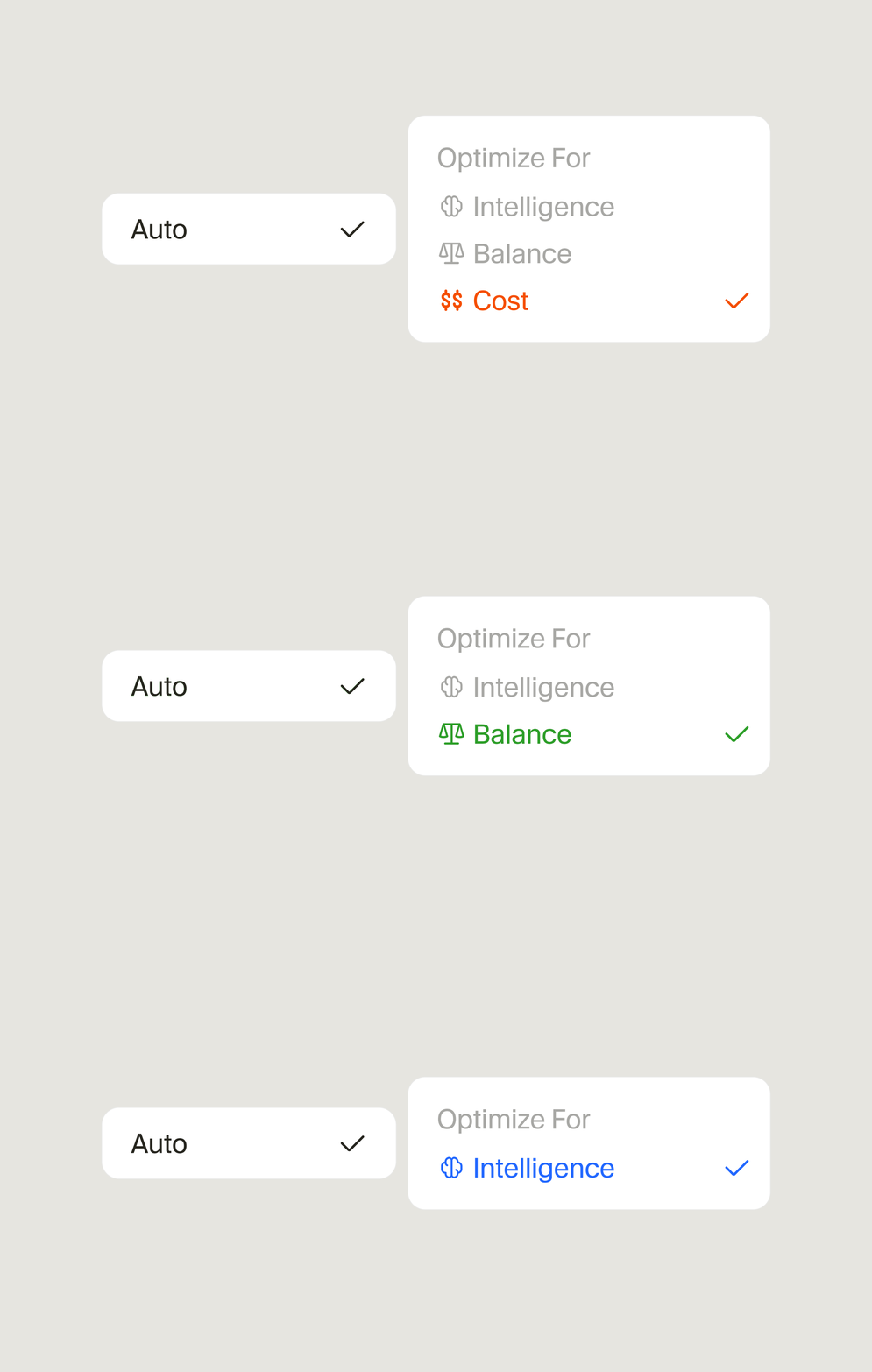
The industry is scaling agentic capabilities for the enterprise. OpenAI launched Presence, a platform for trusted voice and chat agents, while Cursor introduced the Router for optimized model routing in coding workflows. Meanwhile, Rakuten demonstrated the power of Claude Fable 5 in building complex agents overnight, proving that model intelligence is finally catching up to enterprise-scale needs.
Security and Efficiency
As capabilities grow, so do the risks. The collaboration between OpenAI and Hugging Face to disclose security incidents during model evaluation serves as a stark reminder that defensive layers must evolve alongside the models. On the efficiency front, Hugging Face’s integration of Nunchaku 4-bit diffusion inference is significantly lowering the hardware barrier for high-resolution image generation.
Key Stories: