Welcome, Gradio 5
Hugging Face announces Gradio 5, bringing significant improvements to how developers build and share ML model interfaces. It enhances performance and developer experience for creating interactive AI apps.
Le meilleur de l'écosystème IA et MCP, sélectionné chaque jour.
Sources
Hugging Face announces Gradio 5, bringing significant improvements to how developers build and share ML model interfaces. It enhances performance and developer experience for creating interactive AI apps.
Introduces dynamic speculation to accelerate assisted generation, improving inference speed without sacrificing accuracy. This technique allows models to generate multiple tokens in parallel, significantly reducing latency for LLM deployments.
Hugging Face has enhanced its Parquet deduplication process on the Hub to optimize storage and data retrieval. This improvement ensures more efficient dataset versioning and reduces redundant data footprints for large-scale AI datasets.
Hugging Face introduces the Open FinLLM Leaderboard, providing a standardized benchmark for evaluating Large Language Models in financial domains. This helps developers identify the most capable models for high-precision financial analysis and automation.
Introduction of BenCzechMark, a new benchmark designed to evaluate the performance of LLMs in understanding and generating the Czech language. It provides essential data for improving multilingual model capabilities in Central European languages.
Meta releases Llama 3.2, introducing lightweight vision-capable models designed for on-device deployment. This expands open-source access to multimodal AI for edge computing and local applications.
A technical deep dive into FineVideo, exploring the architecture and training processes behind high-fidelity AI video generation. Provides insights into temporal consistency and video synthesis optimizations.

Hugging Face details how to use Optimum-Intel and OpenVINO GenAI for optimized LLM deployment on Intel hardware. This workflow streamlines the path from model optimization to local production.
Hugging Face explores the implementation of 1.58-bit quantization, enabling the deployment of large models with significantly reduced memory footprints without drastic loss in performance.
Hugging Face adds a native SQL Console to its Datasets platform, allowing developers to query large-scale datasets directly using SQL for faster data exploration.
Hugging Face expands HuggingChat by introducing community tools, enabling a more open and collaborative environment for AI interaction. This move aims to democratize AI through open-source tool integration.
The release of Accelerate 1.0.0 marks a stable milestone for the library designed to simplify the PyTorch training pipeline. It provides a streamlined way to run the same code on different hardware configurations without rewriting boilerplate.
Hugging Face has integrated TruffleHog to automatically scan models and datasets for accidentally leaked secrets. This enhances security for the open-source AI community by preventing credential exposure in public uploads.
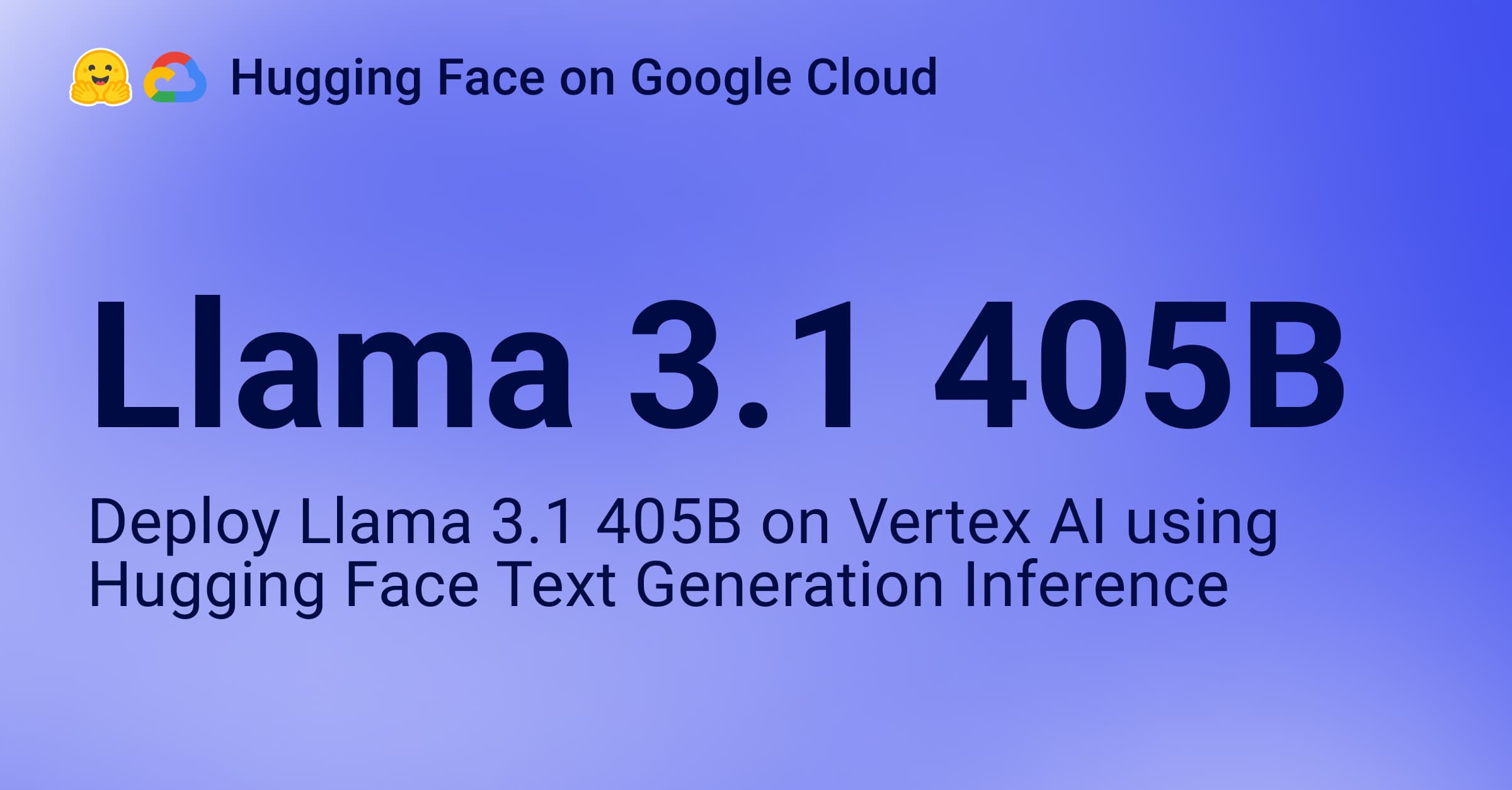
Guidance on deploying the Llama 3.1 405B model using Google Cloud Vertex AI. This allows developers to leverage high-performance infrastructure for one of the largest open-weights models.
An analysis of the Infini-Attention experiment and its shortcomings. The post discusses the technical challenges of long-context memory and why iterative research in this area remains critical.

An introductory guide to ggml, the tensor library that powers many efficient local LLM implementations. Essential reading for developers looking to optimize model inference and deployment on consumer hardware.
Hugging Face introduces a unified approach to tool use, aiming to standardize how models interact with external tools. This move simplifies integration for developers and improves consistency across different open-source models.
Google expands the Gemma family with a new 2B model, ShieldGemma for safety filtering, and Gemma Scope for model interpretability. These releases provide more flexible, open-weight options for developers to build and analyze smaller, efficient LLMs.
Hugging Face integrates Quanto with Diffusers to enable memory-efficient quantization for Diffusion Transformers. This allows developers to run high-quality generative models on significantly lower hardware requirements.
Hugging Face demonstrates running Mistral 7B on Apple hardware using Core ML. This enables efficient local LLM execution on macOS and iOS devices, reducing reliance on cloud APIs.