
Bringing the latest Gemini models to Apple developers
Google brings Gemini models to Apple developers via the Foundation Models framework and Xcode integration. This allows for more secure, cloud-hosted model calls within the Apple ecosystem.
Le meilleur de l'écosystème IA et MCP, sélectionné chaque jour.
Sources

Google brings Gemini models to Apple developers via the Foundation Models framework and Xcode integration. This allows for more secure, cloud-hosted model calls within the Apple ecosystem.

Anthropic releases a Swift package connecting Apple's Foundation Models framework to Claude. It enables developers to offload complex reasoning from on-device models to Claude with typed Swift outputs.

New observability tools for MCP server developers to monitor performance, diagnose latency, and submit servers to the directory in-app. The public beta is now live.
Hugging Face introduces OpenEnv, an open-source initiative to democratize Agentic Reinforcement Learning. The project focuses on creating standardized environments for agent training and evaluation.
Exploration of a multi-agent economy simulated using a small 3B parameter model. Demonstrates the viability of complex agent interactions and emergent behavior in highly constrained model sizes.

Google releases Quantization-Aware Training (QAT) checkpoints for Gemma 4. These optimizations reduce memory overhead and significantly improve performance for on-device deployment on laptops and mobile devices.

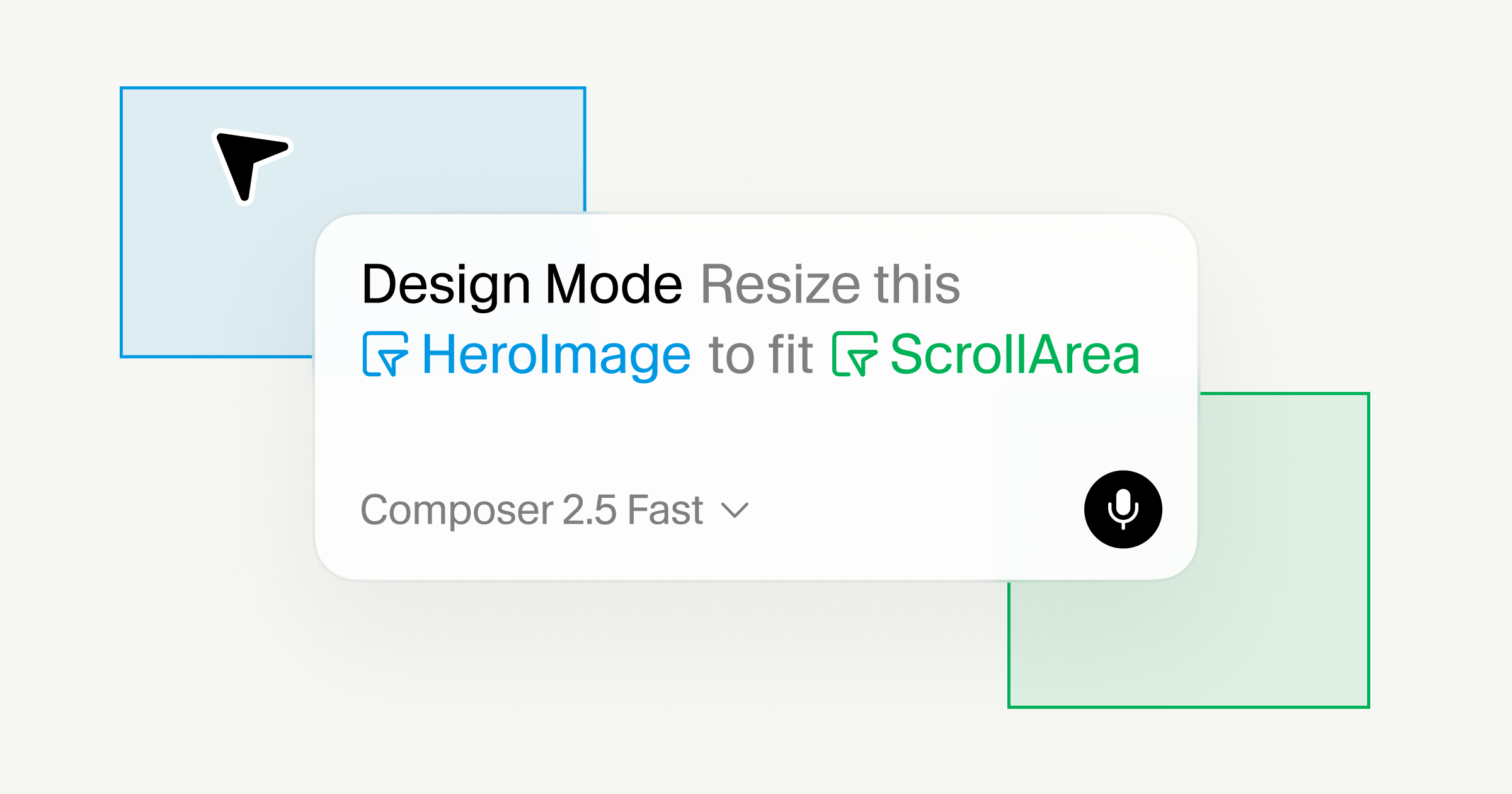
Cursor introduces Design Mode, allowing developers to point, draw, or narrate UI changes directly in the browser. AI agents then automatically update the underlying code to match the visual requests.

Anthropic releases the official product guide for Claude Cowork. The guide covers initial setup and best practices for deploying AI agents to handle complex professional tasks.
.jpg)
A case study on how Claude Code is used internally at Anthropic to automate GTM engineering tasks. It demonstrates significant time savings on repetitive research and email workflows.
NVIDIA releases Nemotron 3.5 Content Safety, providing customizable multimodal safety guardrails for enterprise AI. It focuses on scaling safety checks across global deployments and various data modalities.

Google has launched local development capabilities for Kaggle Benchmarks, allowing developers to create and test AI benchmarks more efficiently. This streamlines the evaluation process for AI models on local machines.
ServiceNow AI introduces EVA-Bench Data 2.0, a comprehensive dataset for evaluating agentic AI across 121 tools and 213 scenarios. This provides a robust framework for measuring tool-use and task-completion capabilities of AI agents.
NVIDIA introduces a new method for generating high-quality synthetic Q&A pairs to improve the pretraining of Nemotron models. This approach leverages task-seeded generation to create more diverse and accurate training data.
OpenAI introduces a new memory system for ChatGPT designed to better remember user preferences and maintain context across conversations. This improvement aims to make the assistant more personalized and relevant over the long term.
Hugging Face introduces a redesigned CLI optimized for AI agents to interact with the Hub. This enables more seamless model and dataset management within agentic workflows.

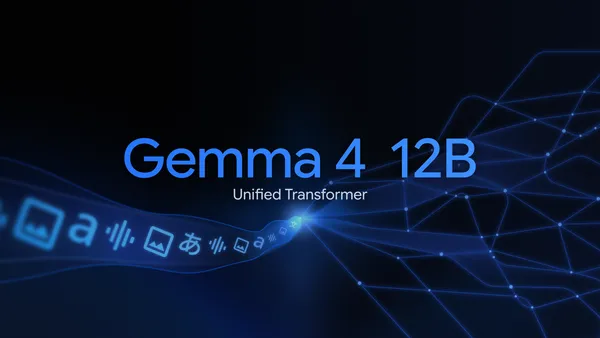
Google releases Gemma 4 12B, a high-performance multimodal model designed for local execution on laptops. It features a unified, encoder-free architecture to bring advanced intelligence to the edge.
OpenAI enhances GPT-Rosalind with advanced biological reasoning, genomics analysis, and medicinal chemistry expertise. This update aims to accelerate life sciences research and experimental workflows.
Dharma-AI explores the application of Direct Preference Optimization (DPO) outside of traditional chatbot contexts. This research expands the utility of preference alignment for broader AI tasks.
Wasmer leveraged Codex with GPT-5.5 to develop a Node.js runtime for the edge, drastically reducing development time. The project demonstrates the power of frontier models in systems engineering.

Anthropic shares how the Claude Code team restructured their engineering processes to make agentic coding the default workflow. It provides a blueprint for scaling AI-native development practices in a professional engineering organization.